Accurate Damp Diagnosis
A Checklist for Landlords
With the arrival of spring, now’s a great time to assess the current condition of your housing stock. Dealing with dampness now will save you from a crisis next mould season. Get prepared with these handy tips.
Estimated Reading Time: 4 minutes

Whilst cleaning mould, repainting a wall or replacing damaged plaster may improve appearance for a while, the problem will return if the moisture source remains. Remember: you cannot diagnose damp from the stain alone. Mouldy patches on walls, salt deposits or damp corners only tells you where moisture has become visible. It does not tell you where the water came from, how long it has been there or which building defect is the cause.
Remember: dampness can only be solved once building defects, inadequate ventilation or heating has been rectified. You should never rely on surface treatment alone.
A practical damp inspection begins by analysing the pattern and position of moisture. Is the problem low on the walls, localised around a window or door, spreading across a cold corner or linked to recent rain?
Whether a problem presents as penetrating damp, rising damp or condensation depends on how moisture moves through or into the building. Solving it depends on identifying where that moisture is coming from.
Low-level damp staining with salt marks may point to rising damp, caused by a combination of ground moisture, bridging at the damp-proof course level or a missing/faulty damp-proof course.
A patch that worsens after rain often suggests penetrating damp; external water ingress through masonry defects, failed pointing, cracked render, leaking gutters or roof defects.
Black mould in corners, behind wardrobes or around window reveals may be due to condensation on cold surfaces with weak air movement.
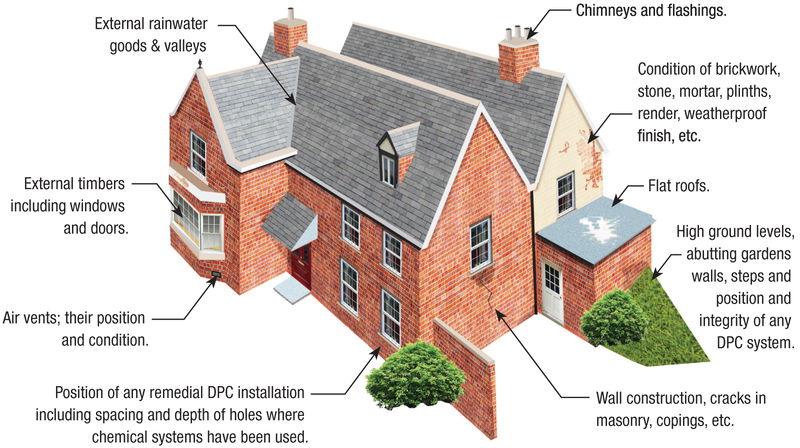
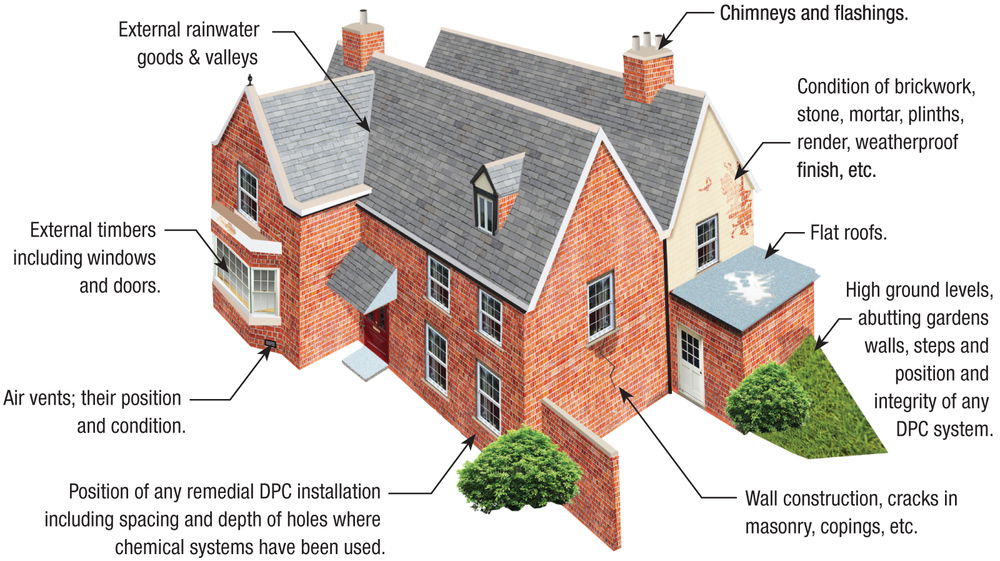
Next, check roof level conditions and work your way downwards. Look for slipped tiles, defective flashings, blocked gutters, leaking hopper heads, loose joints in downpipes and cracked render. Then check whether the wall is exposed to prevailing weather and whether the affected internal area sits directly behind one of those defects.
Inspect whether the ground level has been raised too high against the wall. Building Regulations Approved Document C guidance1 states that the damp-proof course should generally be at least 150 mm above adjacent ground level. When the external ground bridges that gap, dampness can rise into the building’s walls.
Air bricks also matter. If they are blocked, the sub-floor void can stay damp and poorly ventilated, increasing the risk of timber decay and low-level moisture symptoms.
Rising damp is often misdiagnosed, but this doesn’t mean that ground moisture is never a cause of dampness. It just means that extra care should be taken to first rule out bridging via high external ground levels, penetrating, rising damp and condensation before concluding that a damp-proof course has failed.
For landlords, that is a useful safeguard against unnecessary remedial work. A low-level tide mark may suggest moisture from the ground, but it is not enough on its own to justify an injected damp-proof course or full replastering specification.
Condensation is common, but it still requires careful diagnosis. Very simply, condensation forms when warm moist air meets a cold surface. The task for you as a landlord is to find out why that surface is cold and why moisture is not clearing. Common causes include inadequate extract ventilation, intermittent heating, thermal bridges around windows and doors, blocked background ventilation and furniture packed tightly against colder external walls.
In practice, appropriate actions involve assessing the ventilation and central heating situation and condition of insulation, as well as taking into account the moisture production inside the room itself.
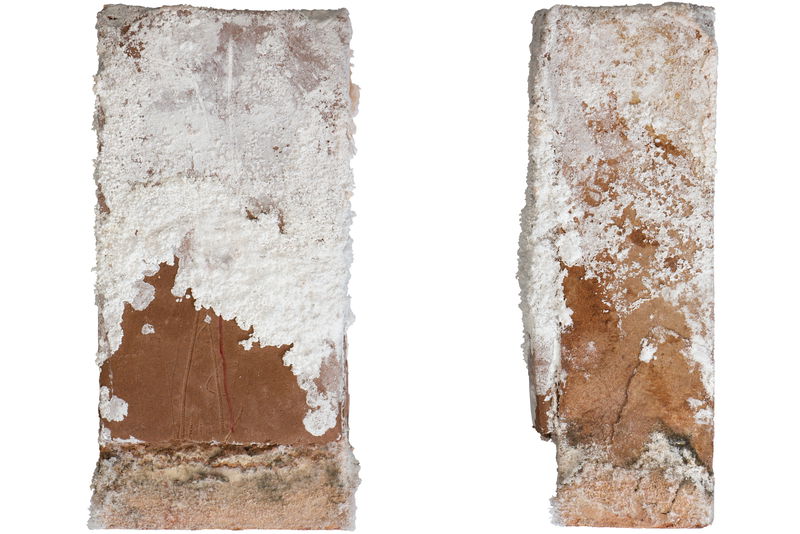
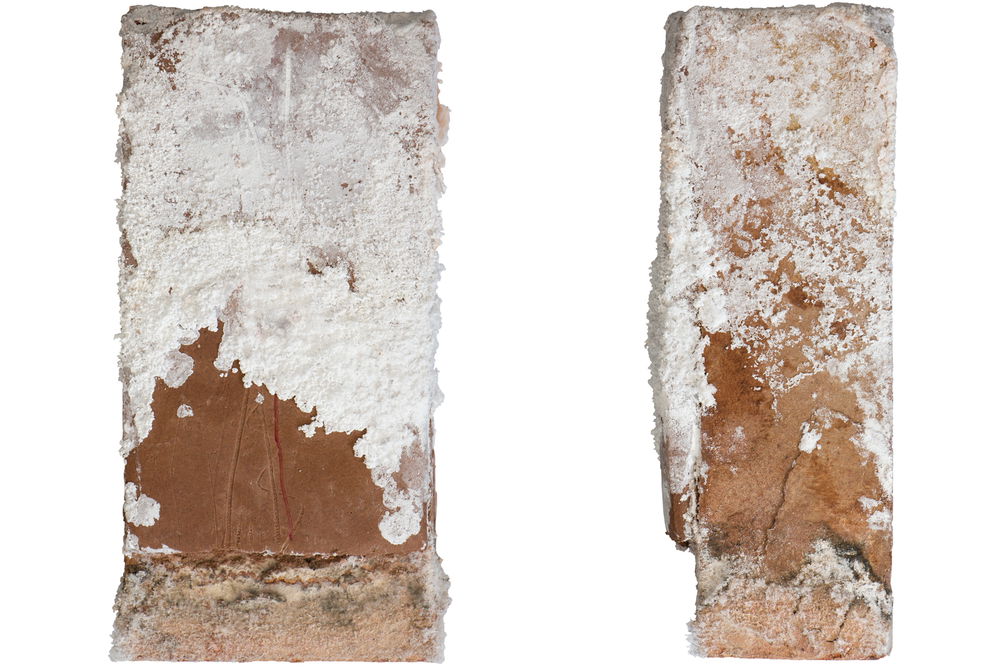
Long-term damp can leave hygroscopic salt contamination behind in plaster and masonry after the wall starts to dry. If it is not addressed during remediation, these salts can cause white deposits, spoil fresh plaster and interfere with paint adhesion.
When hygroscopic salts remain in the wall, they can continue to absorb moisture from the air. That can leave the surface feeling damp and can damage finishes even after the original moisture defect has been fixed. This is why local gypsum patch repairs on previously saturated walls often perform poorly, and why salt-resistant remedial plaster systems are usually needed where contamination remains.
A sound damp inspection follows a sound process.
Record the symptoms. Inspect externally first. Compare the defect pattern with weather exposure, plumbing routes and room use. Check ventilation and surface temperatures where condensation is suspected. Review whether any previous repairs may have trapped moisture or left contaminated plaster behind.
If the cause is still unclear, consult a suitably qualified surveyor rather than defaulting to a standard treatment package.
Sign up for the Safeguard Half-Day Damp Proof Course.
| 1. | The Building Regulations: 2010 - Approved Document C: Site preparation and resistance to contaminants and moisture: Section 5.5 & BS6576: 2005 + A1:2012: The Code Of Practice For Diagnosis Of Rising Damp In Walls Of Buildings And Installation Of Chemical Damp Proof Courses: Section 8.3 |
How can we help?
Related Pages
Get it Done


Subscribe to get information about products and offers.



