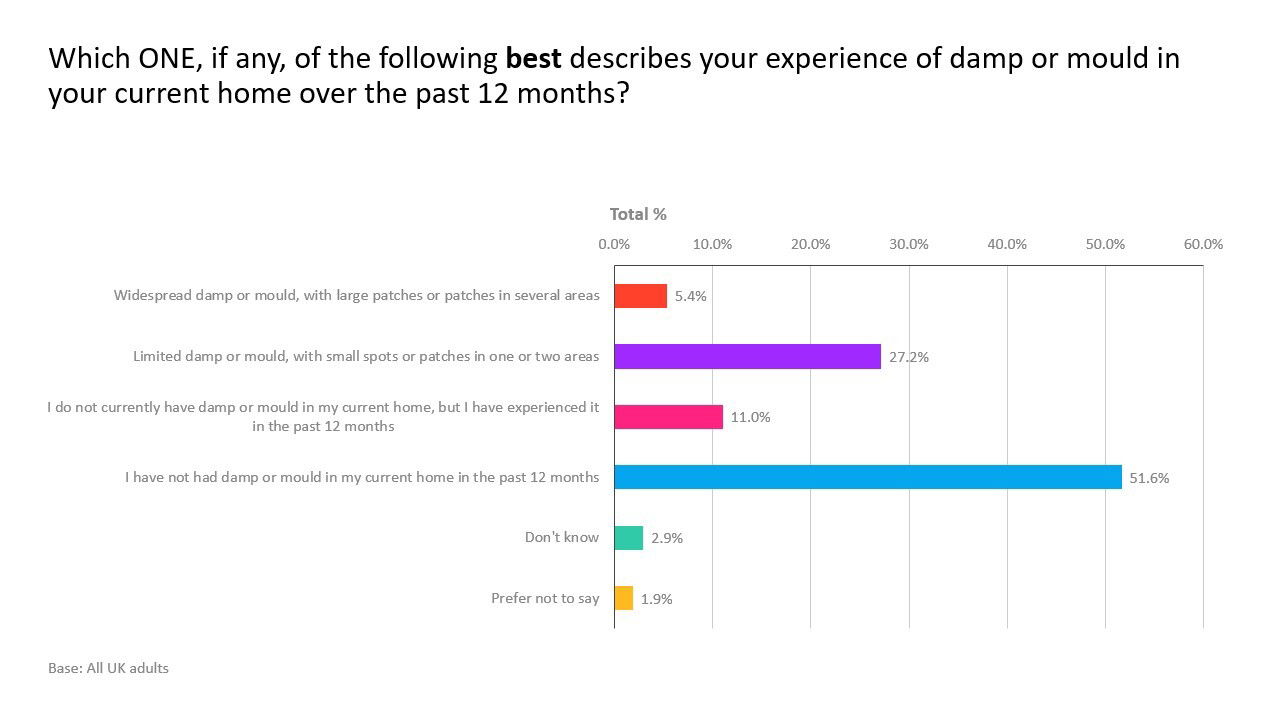
One in three UK adults (33%) have had damp or mould in their current home in the past 12 months, and more than four in ten (44%) have experienced it in the past 12 months, according to new research carried out this month.
The YouGov survey of 2,130 UK adults, commissioned by damp and mould specialist Safeguard Europe, was carried out on 15 and 16 October 2026, making it one of the most up-to-date pictures of damp and mould in British homes.
It comes a year after Awaab's Law came into force on 27 October 2025, requiring social landlords in England to investigate and fix damp and mould hazards within strict time limits. Experts have warned that Britain's ageing housing stock is still putting residents' health at risk.
Private renters and council tenants are the most likely to be affected. More than half of private renters (54%) and council tenants (53%) surveyed say they have had damp or mould at home in the past year, compared with 42% of homeowners.
Damp or mould in the past 12 months, by type of home:
Private renters: 54% have had damp or mould in the past year, and 41% have it in their current home
Council tenants: 53% in the past year, and 43% right now
Housing association tenants: 41% in the past year, and 28% in their current home
Homeowners: 42% in the past year, falling to 39% of people who own their home outright
Serious mould: one in ten private renters (10%) and 13% of council tenants have widespread damp or mould, against 4% of outright owners
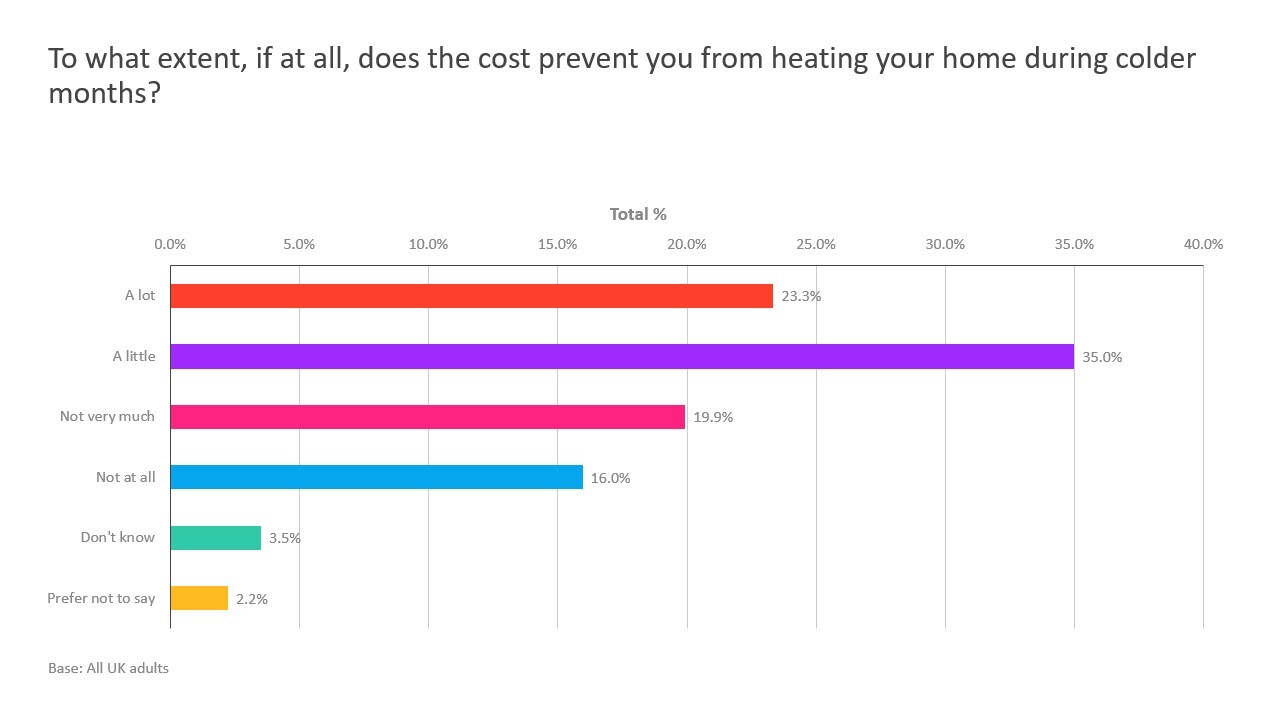
Struggling to heat: almost six in ten UK adults (58%) say cost stops them heating their home in colder months. More than four in ten council tenants (42%) surveyed say it stops them "a lot"
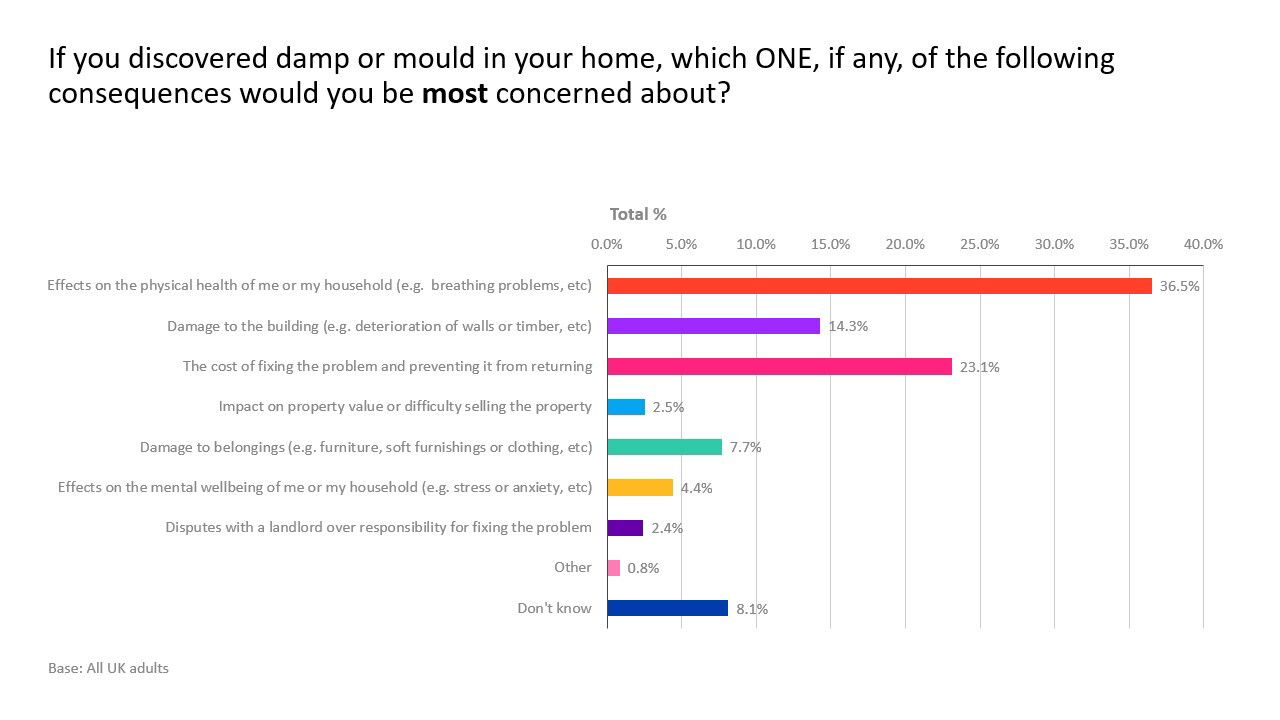
Landlord disputes: one in seven private renters (14%) say a dispute with their landlord over fixing a damp or mould problem would be their biggest worry
The government's English Housing Survey 2024 to 2025 records damp problems in 5% of homes in England. That figure counts only damp that a surveyor sees on the day of a visit and judges serious enough to be a health and safety hazard. The survey notes that minor damp is not recorded, and that seasonal damp may not show up on the day.
When the same government survey asks households themselves, 30% say their home has problems with condensation, damp or mould. That includes 46% of private renters and 41% of social renters. The new YouGov figures, which also ask people about their own homes, are in line with this.
The official surveyor fieldwork also ran from March 2023 to March 2025. The YouGov research was carried out this month, at the start of the heating season.
Awaab's Law is named after Awaab Ishak, who died in December 2020, aged two, after long-term exposure to mould in his family's social housing flat in Rochdale.
The law came into force on 27 October 2025 for social landlords in England. Councils and housing associations must now investigate potential hazards within 10 working days and complete safety work on significant damp and mould within five working days. Emergency hazards must be dealt with within 24 hours. If the work can't be done in time, tenants must be offered somewhere else to stay.
The second phase starts on 30 November 2026 and adds hazards such as excess cold, fire and electrical faults. The Renters' Rights Act 2025 gives the government powers to extend it to private landlords, although no date has been set.
The new figures suggest that private renters, who aren't yet covered by the law, are among the worst affected.
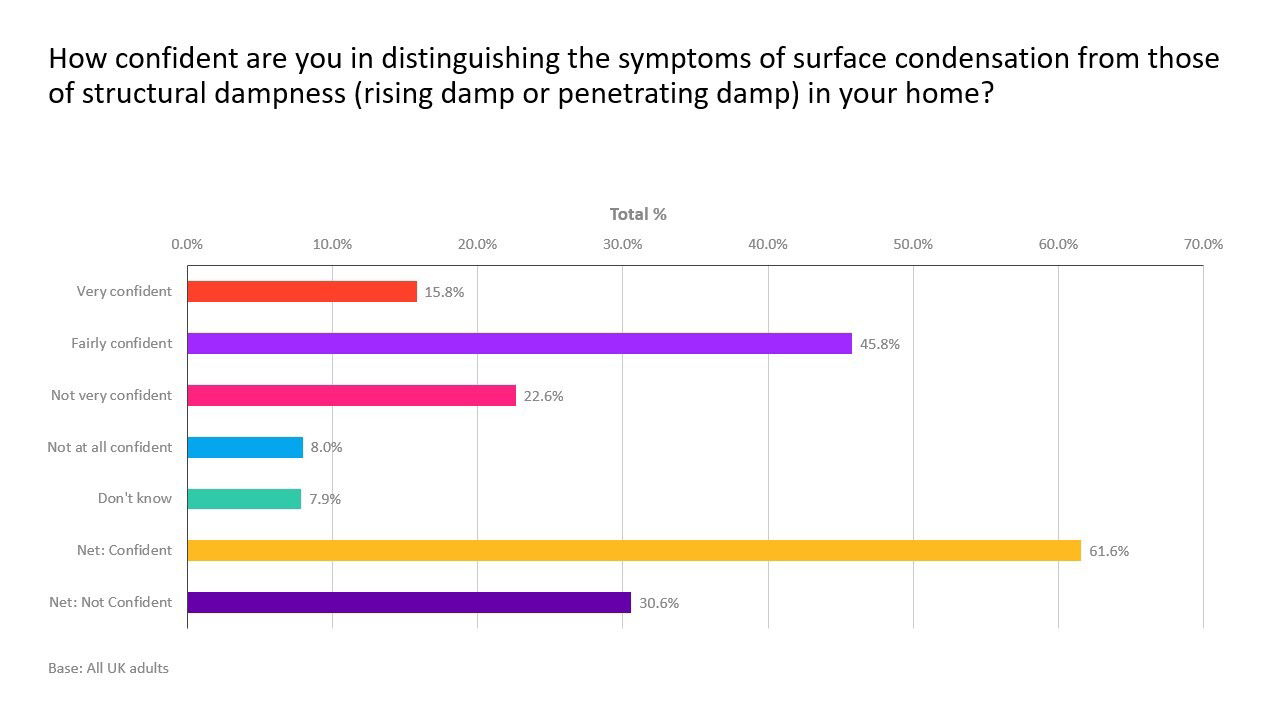
Commenting on the findings, Hudson Lambert, Managing Director of Safeguard Europe and Chairman of the Property Care Association, said: "A year on from Awaab's Law, there is still widespread confusion about what causes damp and mould and how to deal with it. The law is an important step for social tenants, and it is coming down the line for private landlords. But damp and mould affect all of our housing stock and all of our wellbeing, whoever owns the home.
"We have an ageing housing stock, and we need to get much better at managing this problem. Social landlords now have clear legal duties, but many don't have the budgets or the skilled contractors they need to meet them. Legislation has to go hand in hand with investment, skills and education for everyone living in our homes."
How can we help?
Related Pages
Get it Done


Subscribe to get information about products and offers.
