Why Humidity Matters
When people try to tackle indoor summer discomfort, they often only consider high temperatures.
But what really makes a room feel heavy or stuffy is high humidity. Read on to find out what you can do to keep humidity levels comfortable.
Estimated reading time: 2 minutes
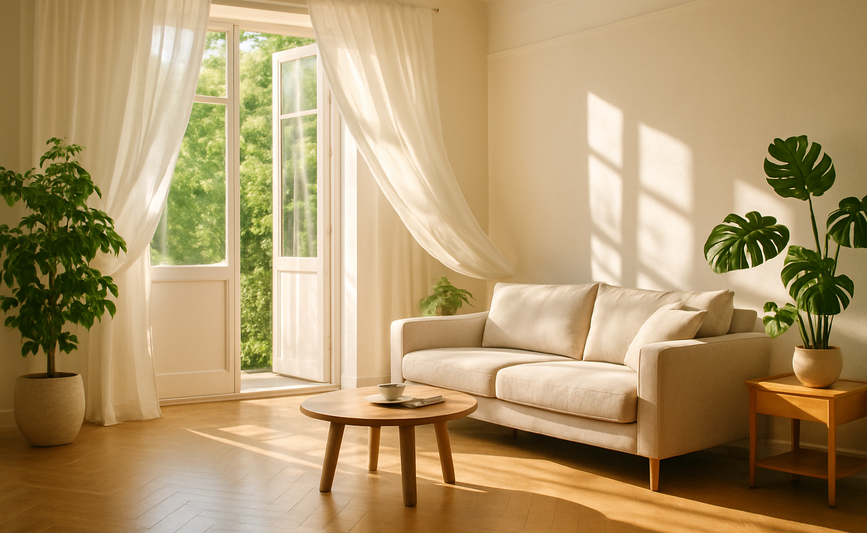
Humid air traps heat and slows sweat evaporation, which acts as the body’s natural cooling system. Even at moderate temperatures, humid air creates a stifling environment that feels several degrees warmer than it actually is. Reducing indoor humidity to between 50% and 60% will improve your comfort levels and reduce reliance on energy-intensive fans and air conditioning systems.
In effectively insulated properties, moisture builds up from cooking, washing and drying clothes indoors, especially in summer when people tend not to open windows during the day. Trapped moisture generated from daily activities is one of the most important contributors to humidity in the home.
Early in the morning and late in the evening are the two best times to let fresh air in. Outdoor air at these times is cooler and drier than at midday. Try opening all the windows in your home to encourage cross ventilation. Keeping internal doors open allows air to circulate freely. In Germany, opening all doors and windows for up to 15 minutes a day is a common habit called stoßlüften, which means ‘shock ventilation’.
Daily activities such as boiling water, drying laundry indoors or running hot showers all release moisture into the air. Ensure that each room has sufficient ventilation. Simply keeping a window open will help, but ensure that bathrooms and kitchens are fully equipped with appropriate ventilation systems, whether that's a simple passive wall vent or extractor fan.
Dehumidification is the most obvious and effective way of actively removing moisture from the air. Dehumidifiers work continuously to draw in damp air and condense the collected water vapour into an integrated tank or your waste water system. This makes the air feel lighter, drier and more comfortable.
Let's return to cross ventilation for a moment. When indoor and outdoor temperatures differ, air moves more freely through a home. Opening windows on opposite sides sets up a breeze that lets cooler air replace warmer air. In multi-storey houses, opening windows and doors lets stairwells act like chimneys. Fresh air enters the house from below, while warm air drifts upwards and out through higher openings.
Preventing heat from entering the home is far easier than trying to remove it once it is inside. Keep blinds or curtains closed during the hottest parts of the day. This is especially important information for south and west-facing windows, as they receive more direct light from the sun during the day. Consider installing external shading such as shutters, awnings or reflective window film to catch the sunlight before it reaches the glass to warm it.
Brick, concrete and stone are perfect materials for building houses because they absorb and store heat during the day, then release it gradually as temperatures fall at night. This helps to reduce fluctuations in indoor temperature. When you add in modern insulation, those temperature changes reduce even further.
While this efficiency is a godsend in winter, it can result in uncomfortably warm evenings. Ventilating at night helps to cool walls and keep your home in comfortable conditions.
How can we help?
Related Pages
Get it Done


Subscribe to get information about products and offers.



